Hidden Mould Found After Bathroom Water Backflow in Oran Park, NSW
Mould can develop in places that are difficult to see, particularly when water has travelled beneath flooring or entered wall cavities.
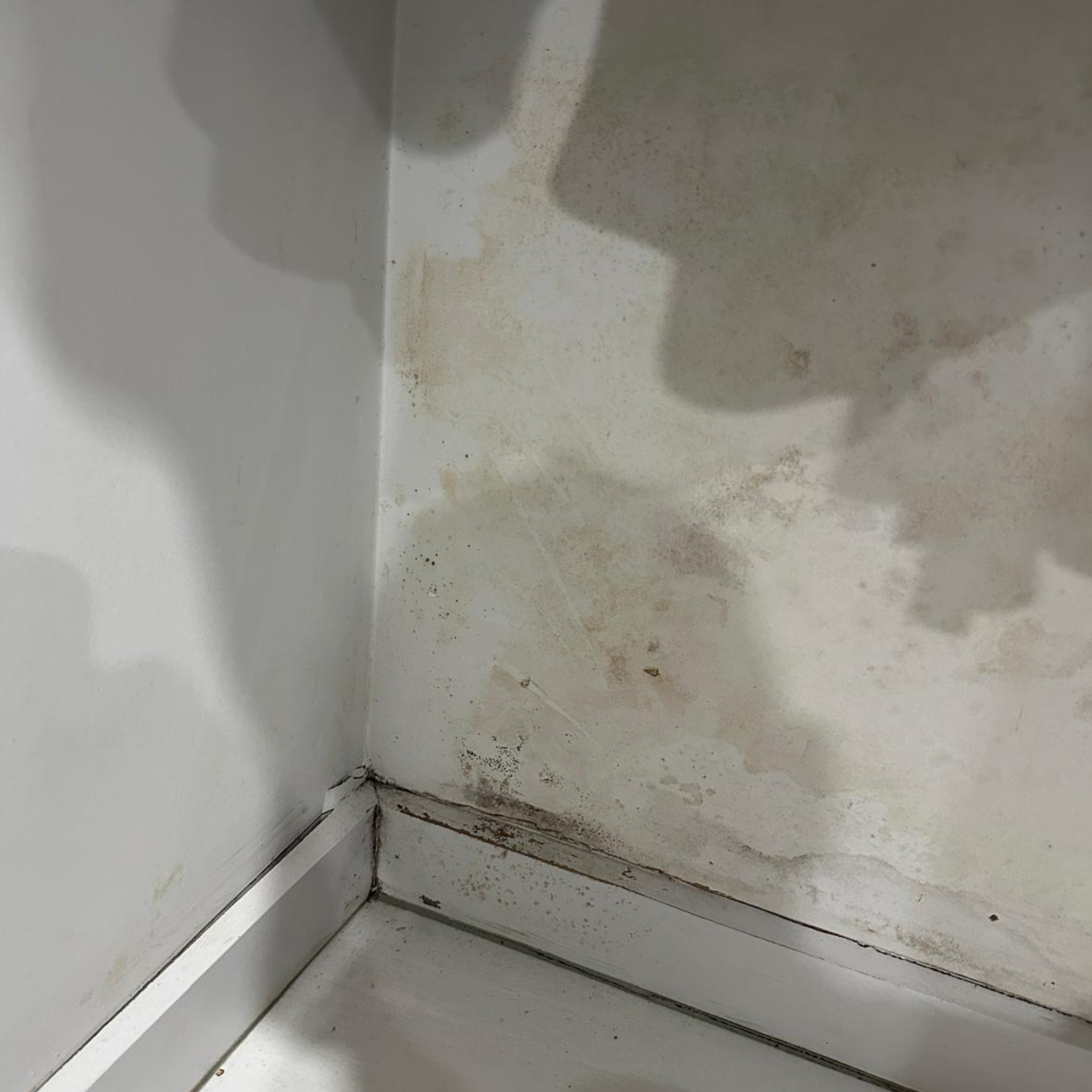
At a home in Oran Park, NSW, a bathroom water backflow affected adjoining bedrooms and hallway areas. Initial inspection identified moisture-affected materials and visible mould growth, but further remediation works uncovered more extensive mould contamination behind wall linings and beneath the flooring.
From Water Damage to a Mould Problem
The incident occurred after bathwater discharged through the drain before backflowing through the bathroom waste and escaping into adjoining bedroom areas.
Inspection and moisture testing identified affected walls, skirting, flooring, wardrobe areas and hallway materials. Visible mould growth and deterioration were also identified, including within Bedroom 1 and the Bedroom 2 wardrobe.
The findings indicated that the problem extended beyond the immediately visible water damage and required further investigation and mould remediation.
Containment Before Mould Remediation
Before mould-affected materials were disturbed, containment was established around affected areas to help reduce the risk of cross-contamination.
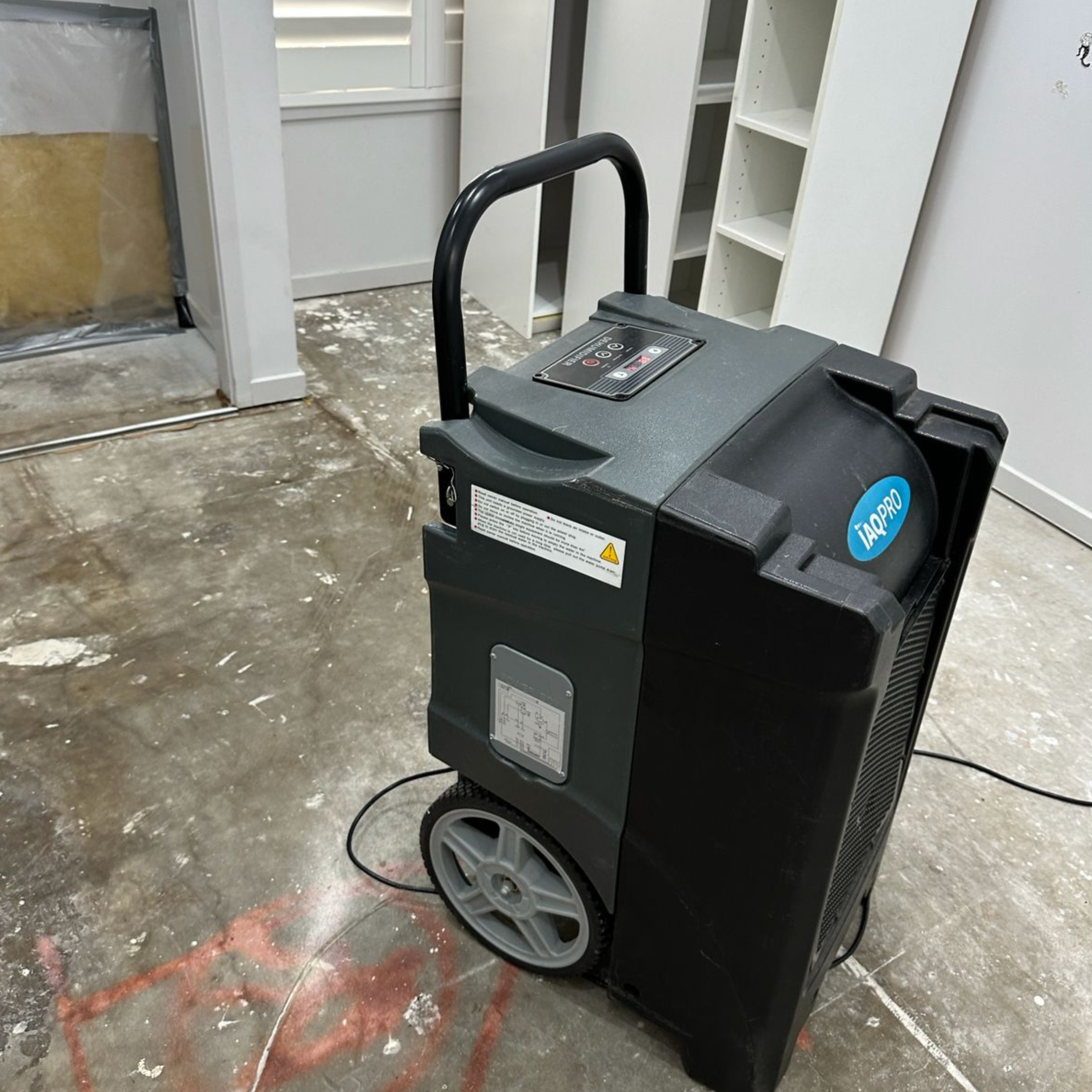
During the preliminary works, an Air Filtration Device (AFD) and dehumidifier were installed within the Bedroom 1 containment to assist with capturing airborne mould spores and reducing moisture levels. Bedroom 2 was also contained, although no air movers were installed there because the affected materials tested dry at the time of inspection.
What Was Hiding Behind the Walls?
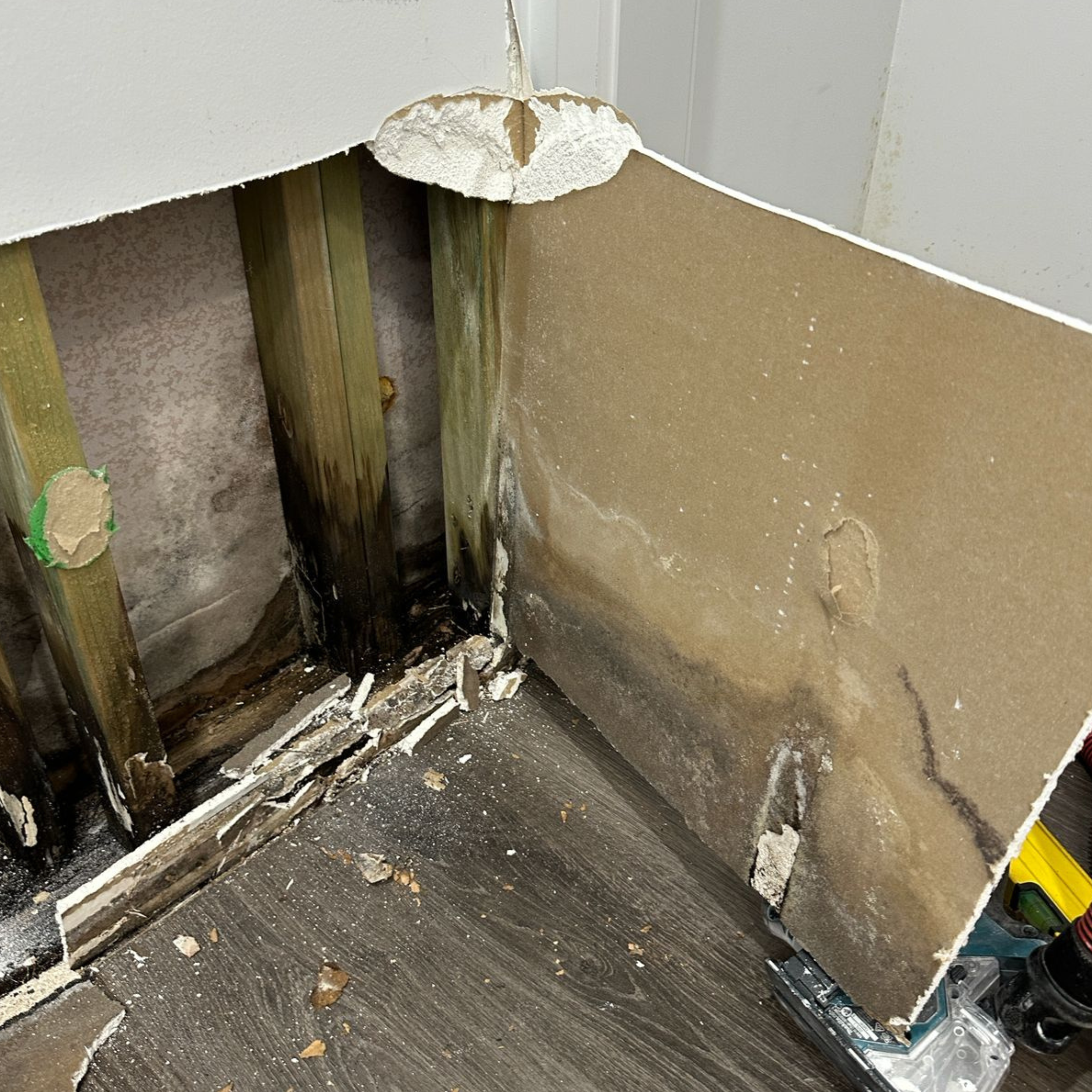
During the remediation stage, mould-affected gyprock and skirting were removed under containment to expose previously concealed areas.
In Bedroom 2, accessible timber framing was mechanically remediated by sanding and grinding to remove mould contamination. Opening the wall also provided limited visibility beneath and around the bathtub, where the visible surfaces appeared to potentially have mould contamination. The area could not be adequately accessed or remediated during these works.
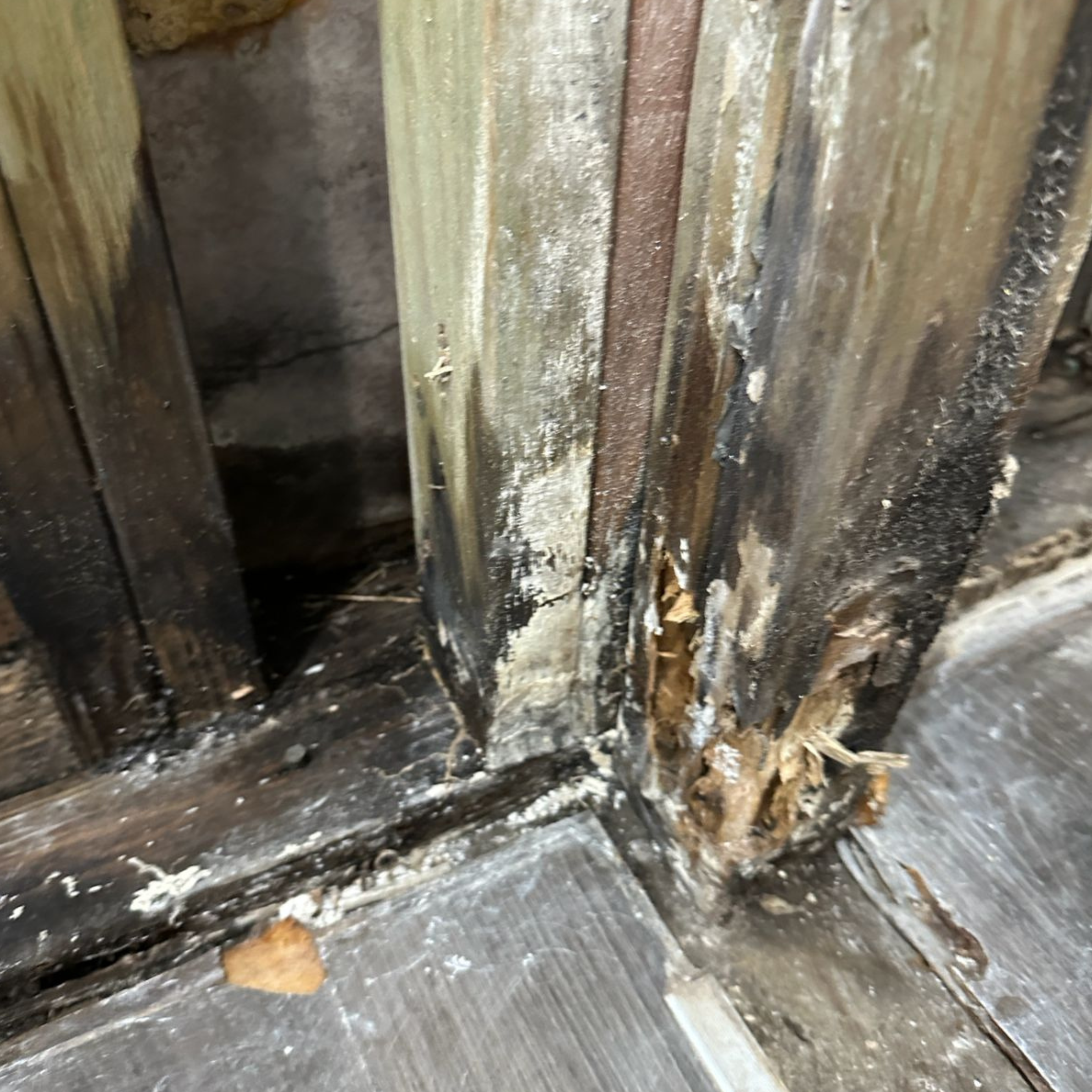
In Bedroom 1, removing the affected wall materials exposed a more significant problem: the timber wall framing was heavily mould affected, with sections exhibiting rot. Its condition meant the affected sections could not be adequately treated in place and required physical removal and replacement.
Mould Discovered Under the Flooring
The investigation did not stop at the walls.
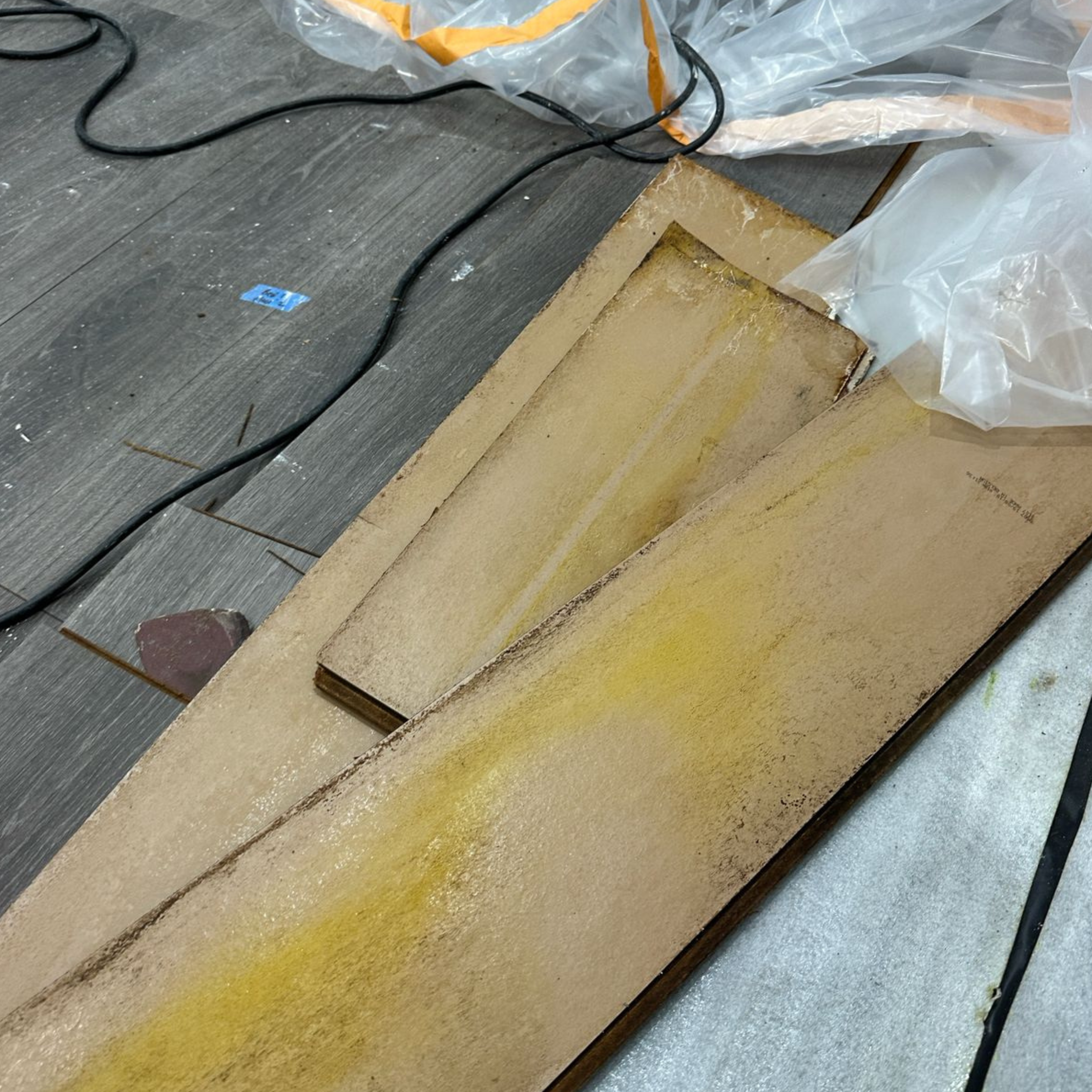
When the floating flooring in Bedroom 1 was removed, wet conditions and mould contamination were discovered underneath. The exposed floor was treated with Decon 30 and a dehumidifier was installed to assist with drying.
The adjoining hallway also required remediation, including removal of sections of mould-affected gyprock, skirting and architrave. The affected hallway section was then sealed and contained.
Why Mould Can Remain Hidden After Water Damage
One of the challenges with water damage is that moisture can migrate into areas that cannot be properly assessed from the surface.
Water can become trapped beneath flooring, behind skirting, inside wall cavities and around structural timber. Even when the original water is no longer visible, affected materials may still require investigation.
At this Oran Park property, opening the affected areas revealed concealed mould contamination, wet materials and deteriorated timber framing that were not fully visible beforehand.
This is why investigating the extent of moisture and mould contamination is an important part of determining which materials can be remediated and which may need to be removed or replaced.
The Mould Remediation Outcome
The Mould Busters team completed mould remediation and drying works across the identified affected areas, including removal of mould-affected materials, remediation of accessible timber framing, treatment of the exposed Bedroom 1 floor and containment of affected areas.
A final attendance was completed to check the affected areas and collect the dehumidifier, with final moisture readings recorded before the equipment was removed.
Further works were recommended to remove and replace the heavily mould-affected and rotting timber framing in Bedroom 1. Further mould remediation may also be required beneath the bathtub in Bedroom 2 due to limited access and the potential mould contamination identified in that area.
