When Should Mould Be Cleaned and When Should Materials Be Removed?
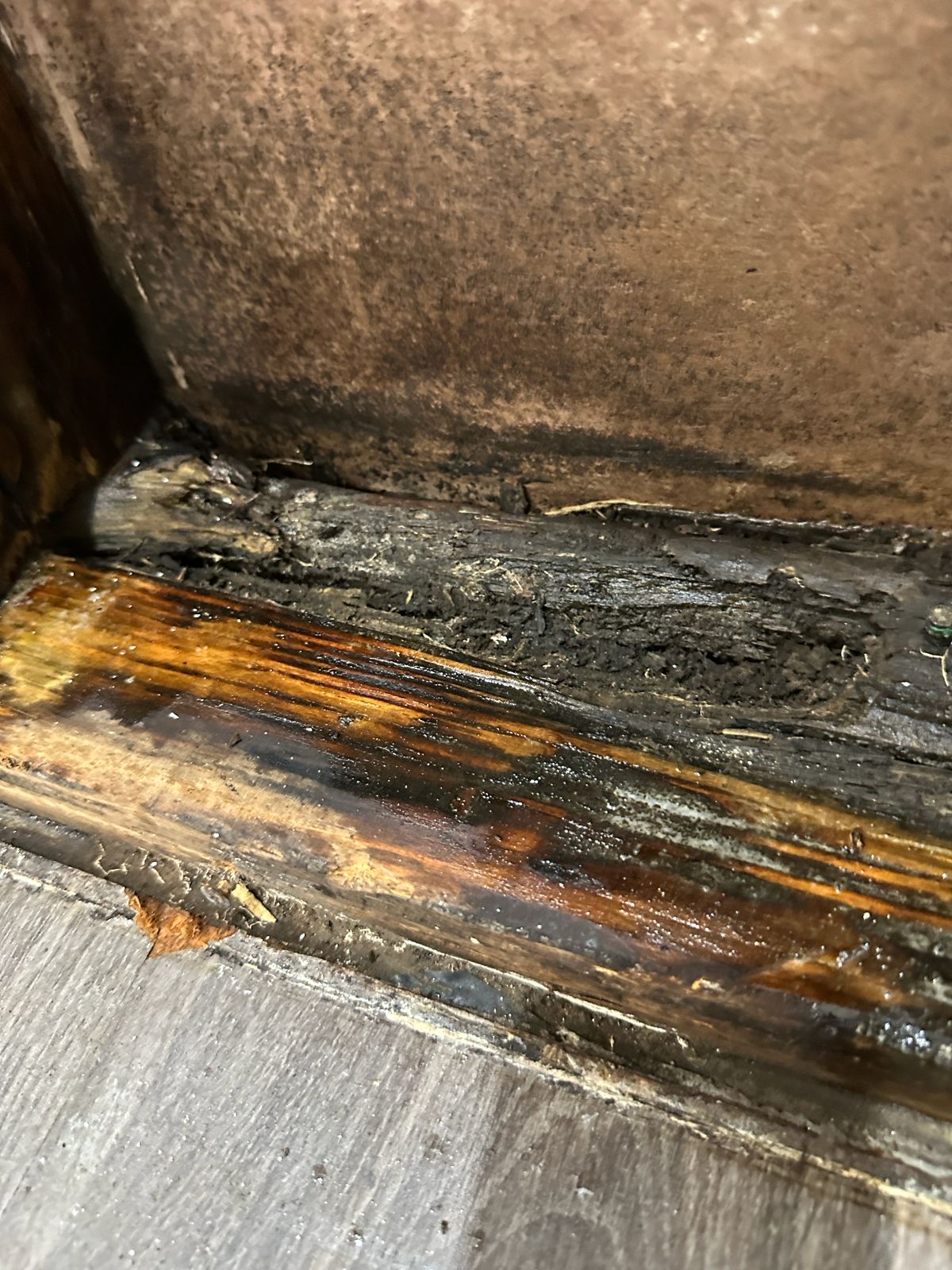
Found mould and wondering whether the surface can simply be cleaned, or whether the material needs to come out? The answer often depends on what the mould is growing on.
Building materials absorb moisture and contamination in different ways. A hard, non-porous surface such as glass needs a very different approach from porous plasterboard or semi-porous timber. Knowing the difference helps decide whether a material can be cleaned and restored, or whether mould removal of the material itself is required.
How Mould Grows on Different Materials
The diagram below shows how mould behaves on different types of materials. The green layer represents mould growth. On non-porous materials, mould sits on the surface. On semi-porous materials, it can begin to work its way in. On porous materials, it can spread right through.
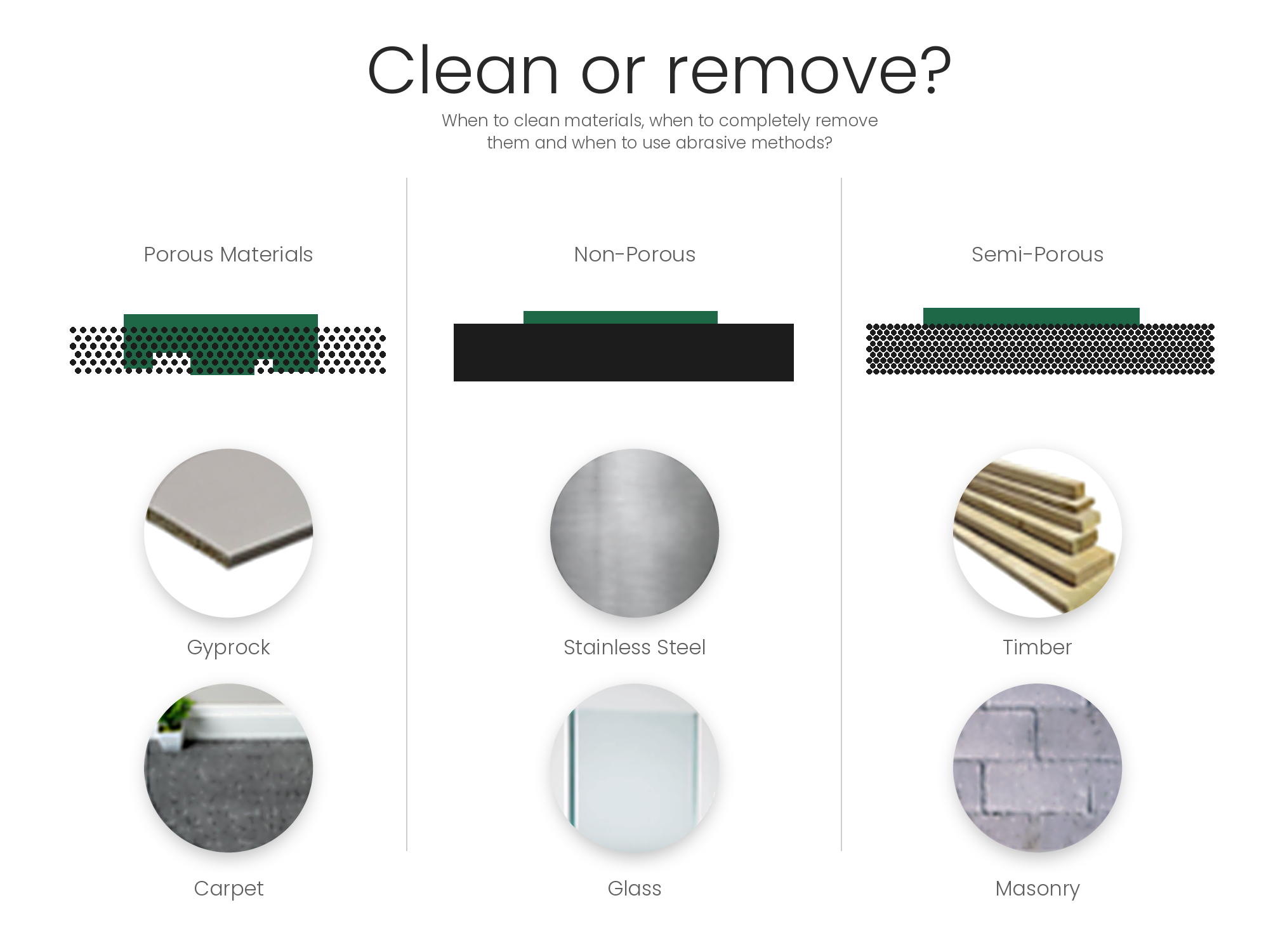
Clean or remove? How mould affects porous, non-porous and semi-porous materials.
Mould on Non-Porous Surfaces Is Often Cleanable
Non-porous materials do not readily absorb moisture or contamination below the surface, so mould tends to stay on top rather than penetrating into the material.
Examples include:
Glass
Metal, such as stainless steel
Glazed tiles
Some plastics
Other hard, sealed surfaces
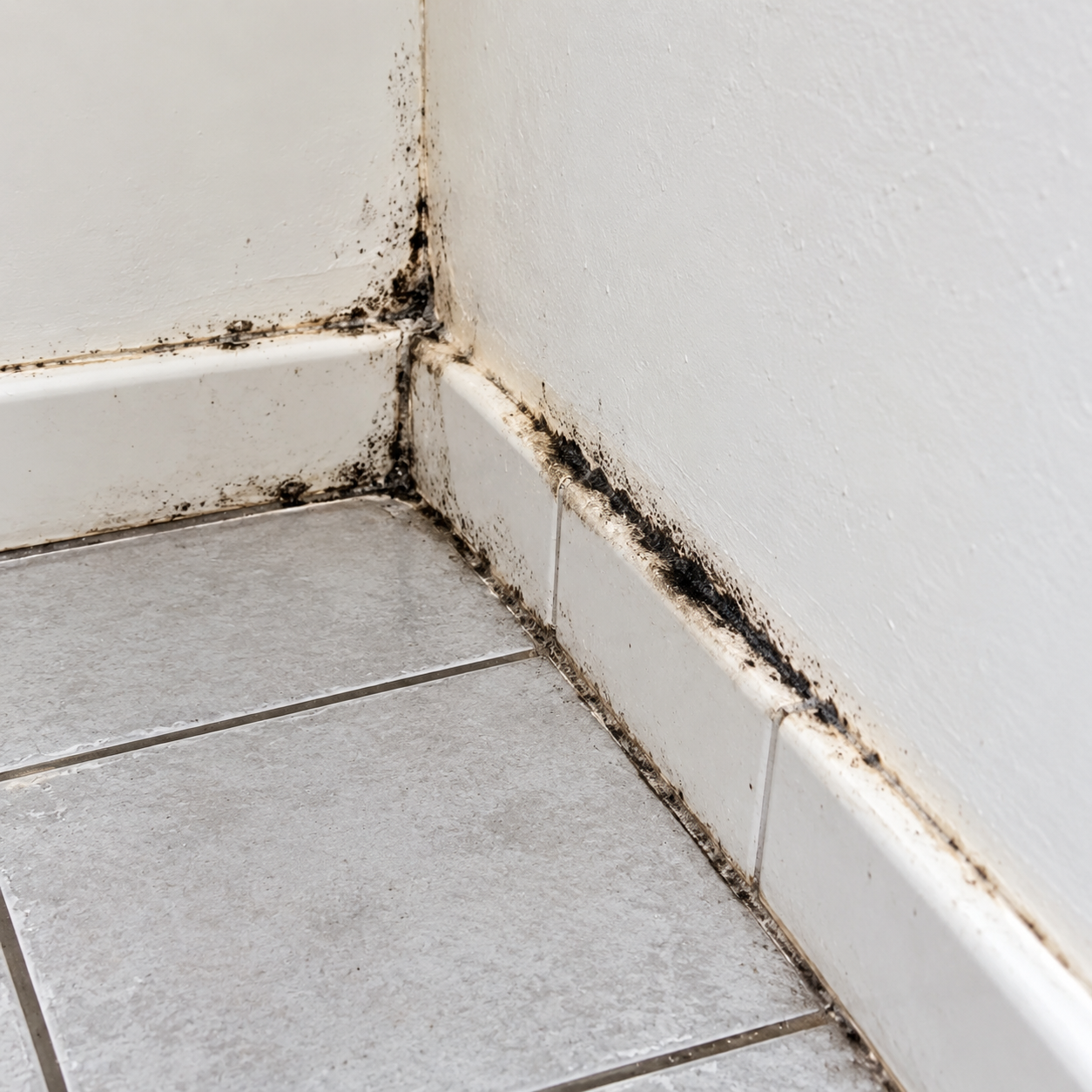
Because the contamination stays more accessible on these surfaces, the material is often suitable for detailed cleaning rather than removal, provided it is still in good condition.
Professional remediation may include HEPA vacuuming and detailed physical surface cleaning. The goal is not just to make the mould disappear visually, but to physically remove the mould growth and associated contamination.
Mould on Timber Needs Assessment First
Semi-porous materials such as timber, concrete and masonry can absorb some moisture and contamination. Mould can begin to penetrate below the surface, so the right approach depends more on the condition of the material.
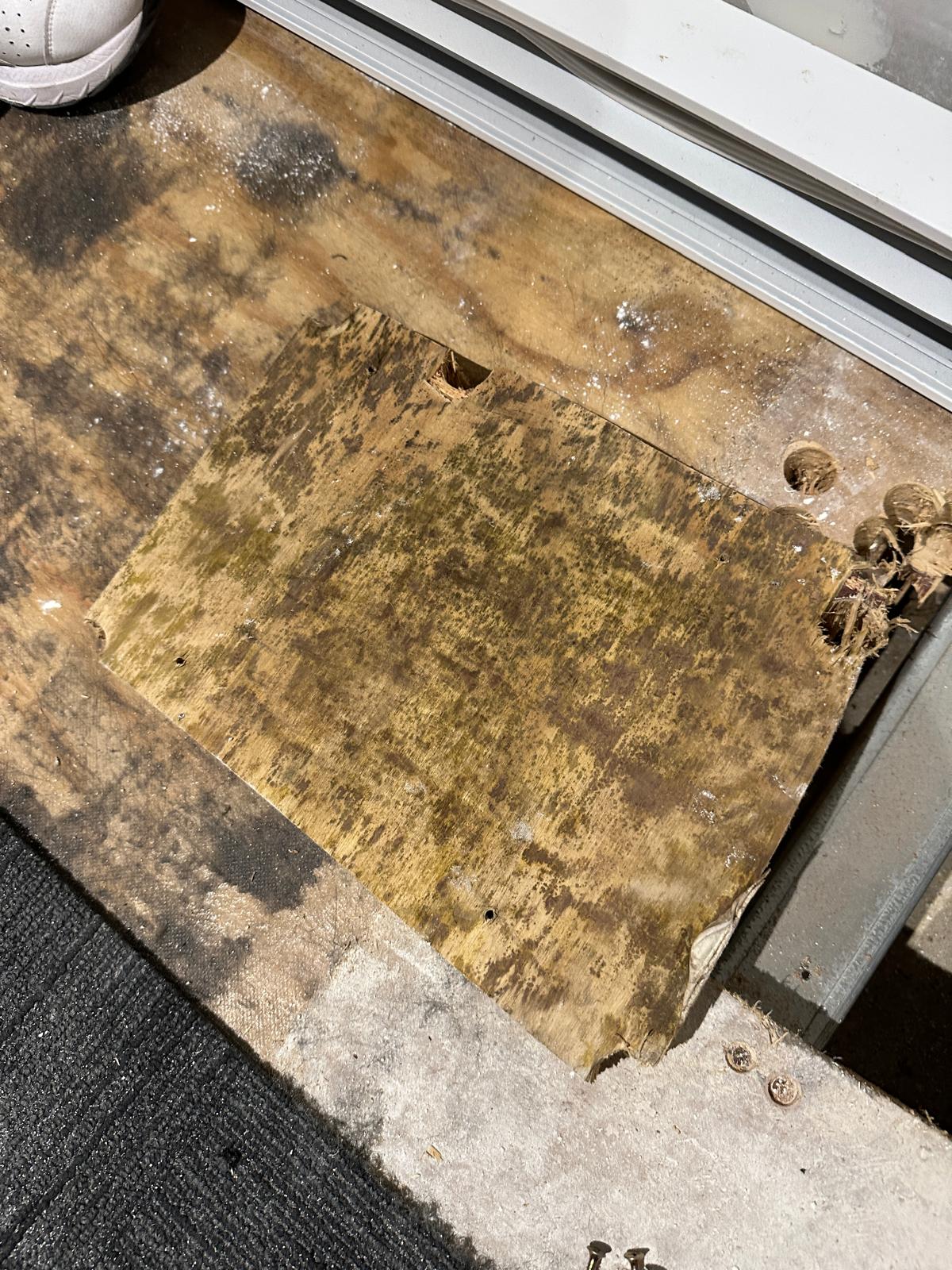
Timber is a good example. Where the timber is still in suitable condition, remediation may involve HEPA vacuuming, detailed cleaning and, where appropriate, mechanical methods such as sanding the affected surface.
Where the timber has significantly deteriorated, or the contamination cannot be adequately removed, removal and replacement may need to be considered. Finding mould on timber does not automatically mean it has to go. The extent of contamination and the condition of the material need to be assessed first.
Why Mould Affected Plasterboard Often Needs Removal
Porous materials are a greater challenge because moisture and contamination can penetrate deep into the material, not just across the surface.
Examples include:
Plasterboard or gyprock
Insulation
Carpet and carpet underlay
Some ceiling tiles
Other highly absorbent materials
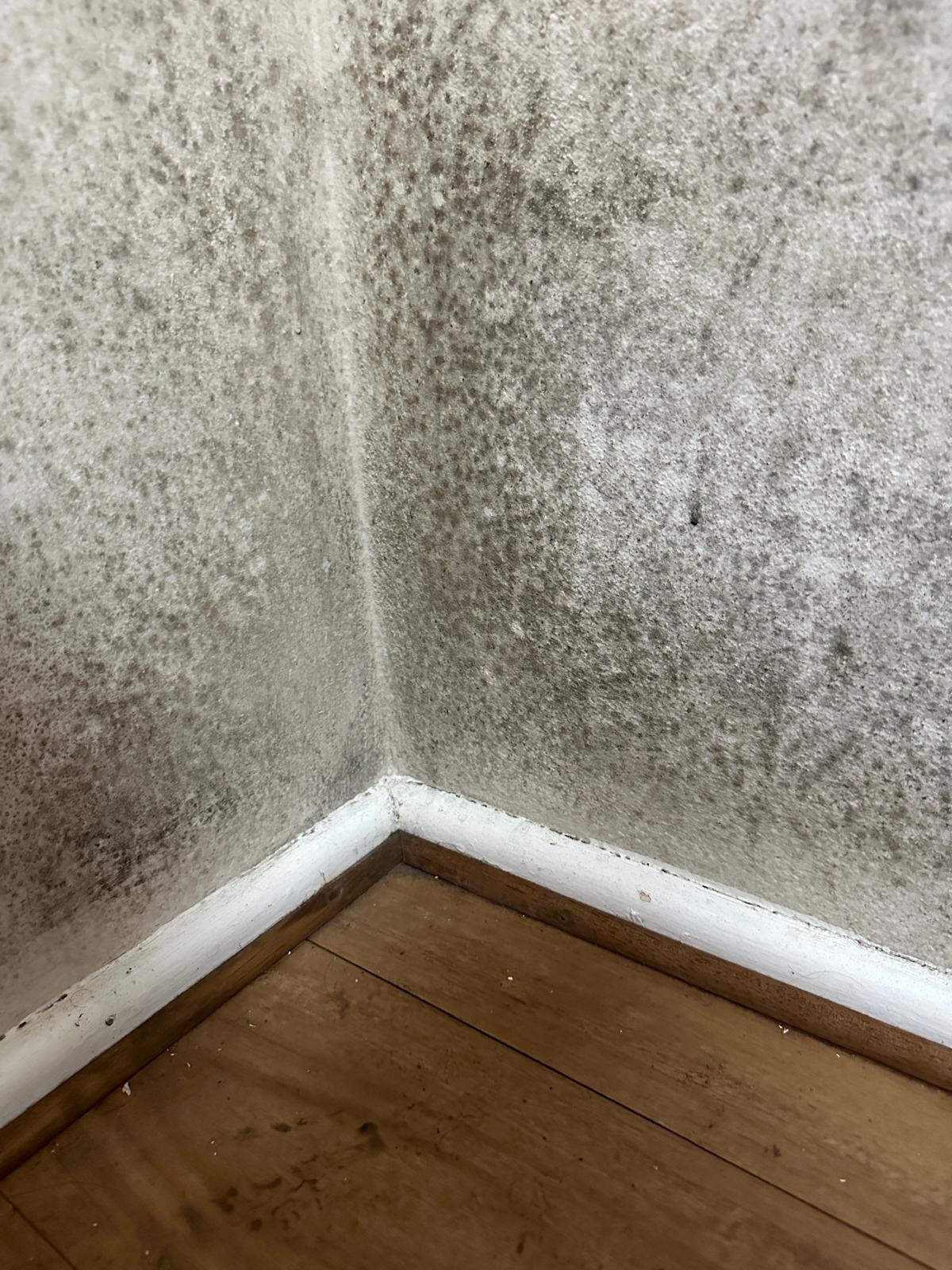
With plasterboard, visible mould on the face may not show the full extent of the problem. Moisture and fungal growth may also be present on the back of the board or inside the wall cavity.
Where porous materials are significantly mould affected, wiping or spraying the visible surface may not remove the contamination. In these cases, controlled removal of the affected material may be required.
Clean or Remove? Choosing the Right Mould Remediation Approach
There is no single method that suits every building material.
Non-porous surfaces are often suitable for detailed cleaning.
Semi-porous materials need assessment to decide whether they can be remediated or should be removed.
Porous materials may need removal where mould has penetrated into the material or cannot be adequately cleaned.
The right approach also depends on the extent of contamination and the condition of the material. At Mould Busters Australia, we assess mould affected materials to determine whether they are suitable for cleaning and restoration, or whether removal should be considered.
Mould Inspection and Advice
Worried about mould in your home? Call Mould Busters on (02) 9090 4625 or book a mould inspection.
